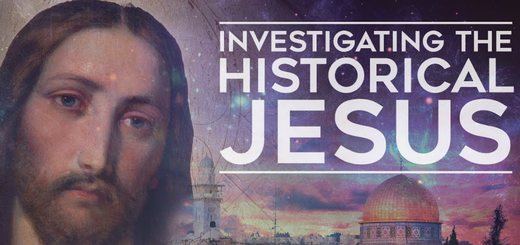
How do I know Jesus was even real?
This was the first thing I checked, because if He never existed the rest does not matter. It turns out that part is not really argued anymore. Roman and Jewish writers who had no reason to help His cause wrote about Him within a century of the crucifixion. Tacitus records His execution under Pontius Pilate. Josephus, a Jewish historian, mentions Him as well.
You can find historians who dispute almost everything about Jesus. You will have a hard time finding one who says He never lived. That surprised me.
Every religion — and those outside religion — recognize Jesus existed. Now it's up to you to decide your faith.
What about other religions? Why Jesus and not someone else?
I have respect for all religions, and Christianity welcomes everyone — that's the point of it. Most religions are good advice about how to climb up to God: be better, try harder, follow the rules. Christianity is the opposite. It says you can't climb, so God came down.
And He came down with the whole thing: peace, love, mercy, grace, forgiveness. That's the heart of it — freely given, never earned. The choice is yours. That's free will.
What about all the terrible things Christians and the church have done?
They're real, and I'm not going to defend them. The scandals, the judgmental churches, all of it happened, and people were hurt in Jesus' name.
Here's what I had to separate: the failures of His followers are not the failure of Him. Don't judge a teacher by his worst students. Judge Jesus by Jesus — what He actually said and did.
What about science?
I worried about this one too. Here's where I landed: science tells me how things work. It doesn't tell me why anything exists at all, or why I have a conscience that bothers me when I do wrong.
The more I learned, the less conflict I found. I don't think faith and science are enemies — I think they're answering different questions.
Why do children suffer? Why would God let a child die?
I do not have an answer that would satisfy a parent who has lost one, and I am not going to pretend I do. Anybody who hands you a tidy explanation for that has never sat with it.
What I can tell you is where Jesus stood on children. When His own disciples tried to shoo them away, He stopped them cold and said the kingdom belongs to them. And when a father's twelve-year-old daughter died, Jesus went to the house Himself. The room was full of weeping, and He walked straight into it — then took her by the hand and raised her. He did not skip past the grief just because He knew the ending.
I do not know why. I know He is not cold about it.
Why is there so much evil in the world?
Most of it comes from us. God gave people real freedom, and real freedom has to include the freedom to do terrible things. He could have made us unable to hurt each other, but then love would not mean anything. You cannot choose something you were built to do automatically.
That is not a satisfying answer when you look at what people do to each other. It was not satisfying to me either. What settled it was not an explanation. It was that He came into it Himself, took the worst of what people are capable of, and forgave them from the cross while they were still doing it.
Then why does God allow suffering at all?
I never got the explanation I wanted. What I got instead was a Person who had been through worse on purpose.
That is not the same as an answer, and some days it does not feel like enough. But it changed who I was asking. I stopped demanding a reason from a distant God and started talking to One who had been in it.
Isn't the Bible just a book men wrote?
Men wrote it. That part is true. What kept me reading was who those men were and what it cost them. The disciples scattered in fear the night Jesus was arrested. Weeks later the same men were preaching in public and would not stop, and most of them died for it. People will die for something they believe is true. Very few will die for something they know they made up.
Isn't the Bible impossible to understand?
That is what I assumed. I pictured the King James version — thee, thou, thy — and figured the whole thing read like Shakespeare. That is one translation, and it is 400 years old.
The Bible app has the same Bible in modern translations written in plain 21st-century English. The New Living Translation just reads like a book. Same meaning, words people actually use.
If the language was the thing stopping you, that excuse is gone. It is free and on your phone — I put the download links here.
What if I have gone too far to come back?
You have not. That is not me being nice, it is the entire point of the thing. Jesus did not come for people who had it together. Every single person He called was a mess in one way or another. If being good enough was the requirement, none of us would qualify, including me.
Once you've started
How do I know I'm actually saved?
You don't have to feel it. I didn't. Salvation isn't a feeling you work up — it's a promise you trust. Jesus said whoever believes has eternal life. That's it.
If you meant that prayer, you're His. On the days you doubt — and you'll have them — go back to what He said, not what you feel. Feelings change by the hour. He doesn't.
Do I have to change first?
No, and you cannot anyway. That was the part I had backwards for years. I thought I had to clean myself up and then show up. It works the other way around. You come as you are, and He does the changing. It is slow. It does not feel like much at first. But it happens.
What if I do not feel anything?
Then you are like most people. I did not have a lightning bolt moment. There was no wave of emotion. What happened to me happened gradually, over months, and I mostly noticed it looking backward. Faith is not a feeling you have to manufacture. Keep showing up and it will grow.
Finding a church
Which kind should I go to?
Do not get stuck here. Catholic, Baptist, Methodist, non-denominational, they differ in practice and in some points of doctrine, but they all hold the same center: Jesus is the Son of God, He died for our sins, He rose. Start with whatever is close to your house or wherever somebody you trust already goes.
What actually happens in there?
Music, usually. Announcements. A sermon that runs twenty to forty minutes. Often communion. Somewhere in there they may pass a basket, and you are under no obligation to put anything in it. The whole thing is about an hour.
What do I wear? Will people bother me?
Whatever you own. Some churches are suits, most are jeans. And no, nobody is going to single you out. You can sit in the back, leave right after, and come back next week having spoken to no one. Do that as many times as you need to.
What if I do not like it?
Go somewhere else. This is the part people do not say out loud. You are not marrying the first church you visit. Try three. You are looking for a place where the Bible is actually taught and where you could imagine knowing people. When you find it, you will know.